Modern Management Tools: Transforming Healthcare Administration
Jul 07, 2026
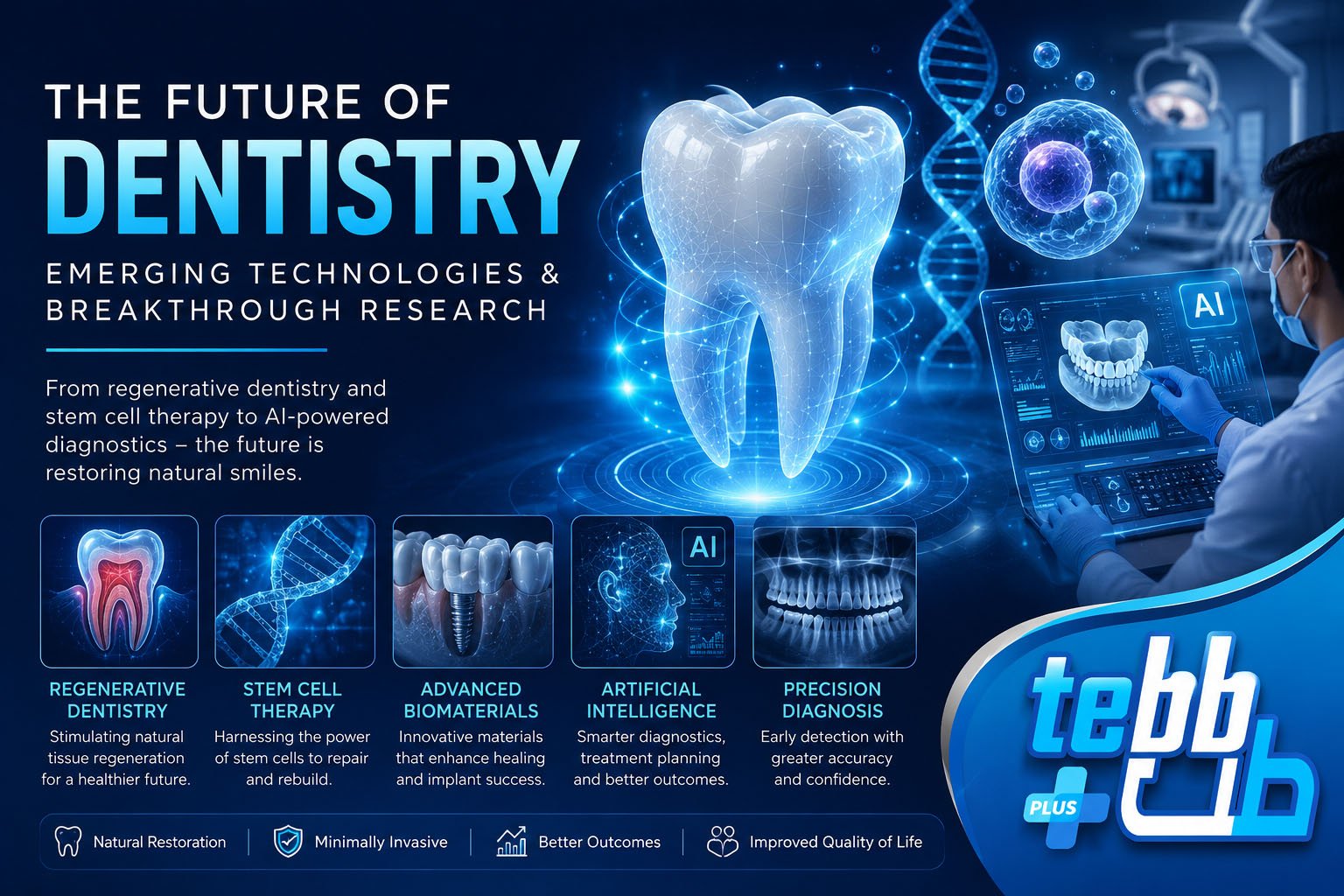
Dentistry is undergoing a remarkable transformation driven by regenerative medicine, artificial intelligence, and advanced biomaterials. While traditional treatments such as dental implants, bridges, and dentures remain highly effective, recent scientific breakthroughs suggest that future dental care may focus on regenerating natural teeth rather than replacing them.
Regenerative dentistry is one of the fastest-growing fields in oral healthcare. It combines stem cell biology, tissue engineering, and biomaterials to stimulate the body's natural ability to repair or regenerate damaged dental tissues.
Current areas of research include:
Dental pulp regeneration
Periodontal ligament regeneration
Jawbone regeneration
Bioengineered natural teeth
Advanced biomaterials that accelerate tissue healing
A comprehensive review published in Regenerative Therapy (2025) concluded that regenerative dentistry is rapidly advancing toward clinical applications capable of restoring both the function and biological structure of damaged teeth.
One of the most exciting developments comes from Japan, where researchers are investigating a novel treatment targeting a protein known as USAG-1.
This protein suppresses tooth development during early growth. By blocking USAG-1, scientists have successfully stimulated the growth of new teeth in animal models. Human clinical trials are now underway to evaluate the safety and effectiveness of this approach, particularly for patients born with congenital tooth agenesis.
If proven successful, this therapy could fundamentally change how missing teeth are treated in the future.
Artificial intelligence (AI) is becoming an essential tool in modern dentistry. Advanced AI systems can now:
Detect dental caries at earlier stages.
Analyze panoramic and intraoral radiographs within seconds.
Assist in treatment planning for dental implants.
Improve diagnostic accuracy.
Predict treatment outcomes using patient-specific data.
Recent studies have demonstrated that AI algorithms can achieve diagnostic accuracy comparable to experienced dental professionals in several imaging applications while significantly reducing interpretation time.
Researchers are also applying machine learning models to regenerative endodontics.
These systems analyze clinical and radiographic information to estimate the probability of treatment success, enabling clinicians to:
Select the most appropriate treatment strategy.
Minimize the risk of treatment failure.
Improve long-term patient outcomes.
Support evidence-based clinical decision-making.
Successful dental implant therapy often depends on sufficient bone volume. New generations of biomaterials are helping clinicians regenerate lost bone more efficiently.
Current innovations include:
Collagen-based scaffolds
Bioactive hydroxyapatite
Tooth-derived bone graft materials
Tissue-engineered regenerative matrices
These materials promote faster healing, improve osseointegration, and may reduce recovery time before implant placement.
Although many of these technologies are still undergoing clinical evaluation, they represent a major shift in the philosophy of dental care. Future treatment may no longer focus solely on replacing damaged tissues but on restoring them through biological regeneration.
As regenerative medicine, artificial intelligence, and biomaterial science continue to evolve, dentistry is moving toward more personalized, minimally invasive, and biologically driven therapies that could significantly improve patient outcomes.
Morita K, et al. The Next Generation of Regenerative Dentistry. Regenerative Therapy. 2025.
Frontiers in Dental Medicine. Regenerative Dentistry Research Collection. 2025–2026.
Najeeb M, Islam S. Artificial Intelligence in Restorative Dentistry. BMC Oral Health. 2025.
Lu J, et al. Machine Learning Models for Prognosis Prediction in Regenerative Endodontic Procedures. BMC Oral Health. 2025.
Research on USAG-1 inhibition and human tooth regeneration trials, Japan.

Jul 07, 2026

Jul 06, 2026
Jan 20, 2026

Dec 26, 2025
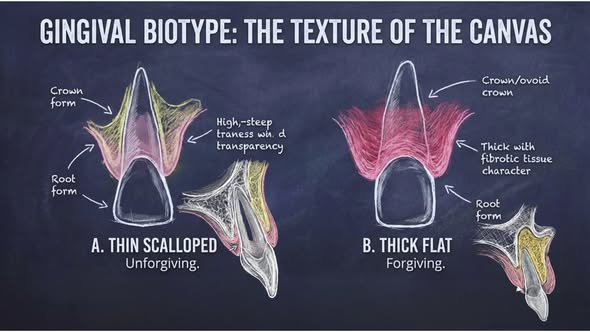
In the Esthetic Zone: "Survival" is Not "Success"In the world of implant dentistry, we have a problem with definitions....